The Best Types of Denture Adhesive


Reader-supported. We may earn a commission from links on this page. Advertising disclosure.
In this article
Dentures can significantly improve your quality of life, but they can also present challenges, such as looseness or discomfort. Denture adhesives are a convenient solution to help keep your dentures in place and ensure a more comfortable fit.
Here we explore the different types of denture adhesives, their benefits, and how to use them effectively.
What is Denture Adhesive?
Denture adhesives are temporary glues that can help dentures stay in place. Most people don’t need them if their dentures fit properly.
However, the bones that support dentures can gradually shrink, causing gaps and making them loose over time. Denture adhesives can fill these gaps, allowing dentures to fit better while you wait for a new set to be made.
Denture adhesives come in different forms:
- Powders
- Pastes
- Adhesive pads
- Creams
- Sheets or strips
What is the Best Denture Adhesive?
Picking the best denture adhesive can be difficult because there are so many products available. However, the American College of Prosthodontists (ACP) recommends avoiding denture adhesives that contain zinc.
Long-term, excessive use of adhesives with zinc can cause adverse reactions like nerve damage, tingling, or numbness. Here are three of the best denture adhesives you can buy:
1. Super Poligrip Original Formula Zinc Free Denture and Partials Adhesive Cream
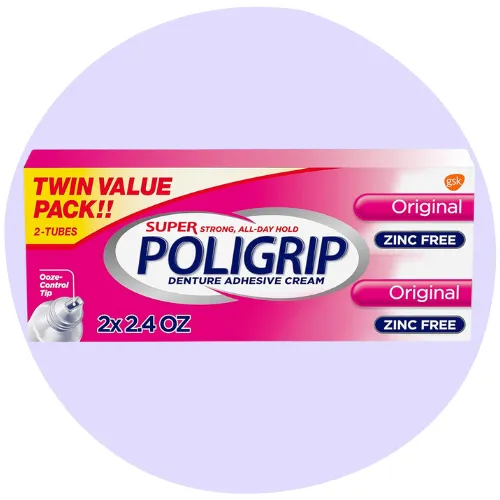
This denture adhesive cream is a top recommendation because it is zinc-free. It provides a 12-hour hold and reduces the amount of food particles that become trapped between the gum tissue and dentures. It is recommended for people with complete or partial dentures.
2. Secure Waterproof Denture Adhesive - Zinc Free
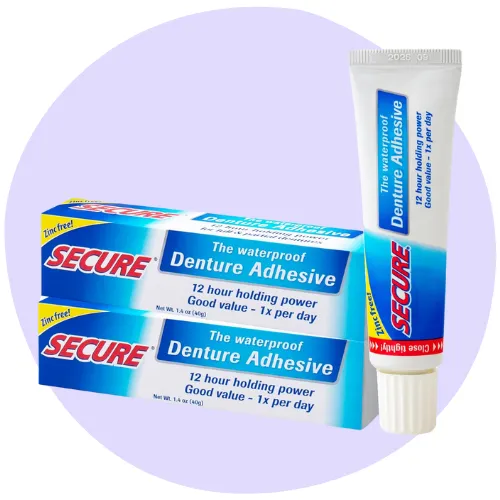
Unlike most denture adhesives, which use water-soluble formulas, Secure Waterproof Denture Adhesive — Zinc Free is a truly waterproof adhesive. It’s also 100% flavor-free, so it won’t change the taste of food.
It does not contain petroleum jelly, mineral oil, or artificial colors and dyes. The manufacturer suggests cleaning your dentures with Secure Dental Cleanser to remove their adhesive product properly.
3. Fixodent Complete Original
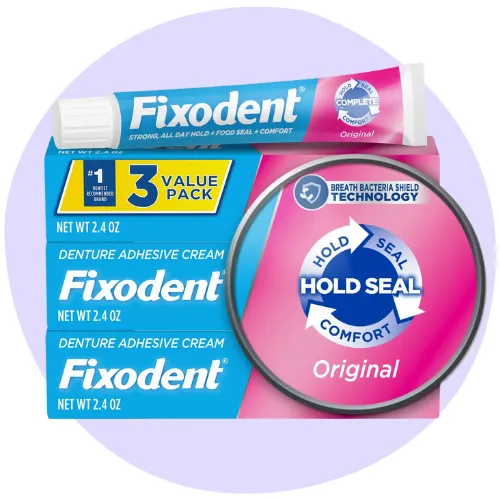
Although it does contain zinc, it doesn’t have as much as many other products. Avoid using this product more than once a day and use a small amount each time. One tube of Fixodent can last for 7 to 8 weeks.
How to Apply Denture Adhesives
The instructions on how to use denture adhesives can vary depending on what you’re using. However, most denture adhesives follow these steps:
- Place a small amount of adhesive onto clean, dry dentures.
- Put the denture in your mouth and close your mouth or bite down firmly for a few seconds.
- Do not drink or eat anything for at least 5 minutes
If extra adhesive overflows from underneath the dentures, you’ve used too much. Don’t swallow the adhesive.
How to Remove Denture Adhesive
Most people should take their dentures out at night while they sleep. To remove dentures with adhesive, you need to:
- Firmly grasp onto dentures and pull them out. You can also fill the mouth with warm water and create a rocking motion to loosen dentures.
- Thoroughly brush dentures using a soft brush and non-abrasive denture cleaner. Make sure that all adhesive is removed and don’t try to remove it with toothpaste.
- Thoroughly clean the inside of your mouth to remove any remaining adhesive.
- Soak dentures overnight in a denture-cleaning solution in lukewarm to warm water.
What are the Benefits of Denture Adhesives
In a 2021 systemic review, researchers concluded that denture adhesives improve retention, bite force, and chewing ability. They can also reduce the accumulation of food debris between dentures and gum tissue.
Adhesives can make dentures feel more comfortable and make you feel more confident while wearing them.
Who Shouldn’t Use Denture Glue?
If you’re wearing dentures for the first time, or using a brand new set of dentures, avoid using adhesives. At this stage denture adhesives can act as a crutch, preventing your muscles from learning how to manipulate the new dentures.
If your dentures don’t fit well or haven’t fit well for a long time, talk to a dentist instead of using denture adhesives. Wearing ill-fitting dentures can cause mouth sores and lead to increased bone loss over time.
Stop using denture adhesives and talk to a dental professional or doctor if you experience any of the following:
- Pain
- Numbness
- Tingling in your extremities
- Allergic reactions
Denture adhesives can be a valuable tool in maintaining a comfortable and secure fit for your dentures. Remember to consult with your dentist if you have concerns about denture fit or adhesive use.
Sources
- “Denture Adhesives.” Food and Drug Administration, 2018.
- Bo et al. “Utilization of denture adhesives and the factors associated with its use: a cross-sectional survey.” BMC Oral Health, 2020.
- Shu et al. “A systematic review and meta-analysis to evaluate the efficacy of denture adhesives.” Journal of Dentistry, 2021.
- “Denture adhesives guidelines.” Oral Health Foundation.
- “Denture Care and Maintenance.” American Dental Association.
- Kumar et al. “Denture Adhesives in Prosthodontics: An Overview.” J Int Oral Health, 2015.

UCLA-trained dentist practicing in public health. Focuses on whole-body approach to dental care.

Related Articles
Hybrid Dentures
Hybrid dentures are a type of dental prosthetic that combines the best features of both implants and dentures. Our guide...
Types of Dentures & Indicators for Treatment
Learn about the seven types of dentures, the procedure, benefits, costs, and more.
What Are Snap-In Dentures?
It can be challenging to care for traditional dentures. Snap-in dentures offer an affordable and convenient solution. Le...
How Do You Repair Dentures and How Much Should You Pay?
Dentures usually last about 20 years, but this will vary from person to person. Learn about the different types of dentu...