Snow Teeth Whitening Review (2026)


Reader-supported. We may earn a commission from links on this page. Advertising disclosure.
In this article
If you want a brighter smile without visiting a dentist, consider the Snow Teeth Whitening Kit. This popular at-home system promises visible results while being gentle on your teeth, even if you struggle with sensitivity.
But how well does it actually work, and is it safe to use daily?
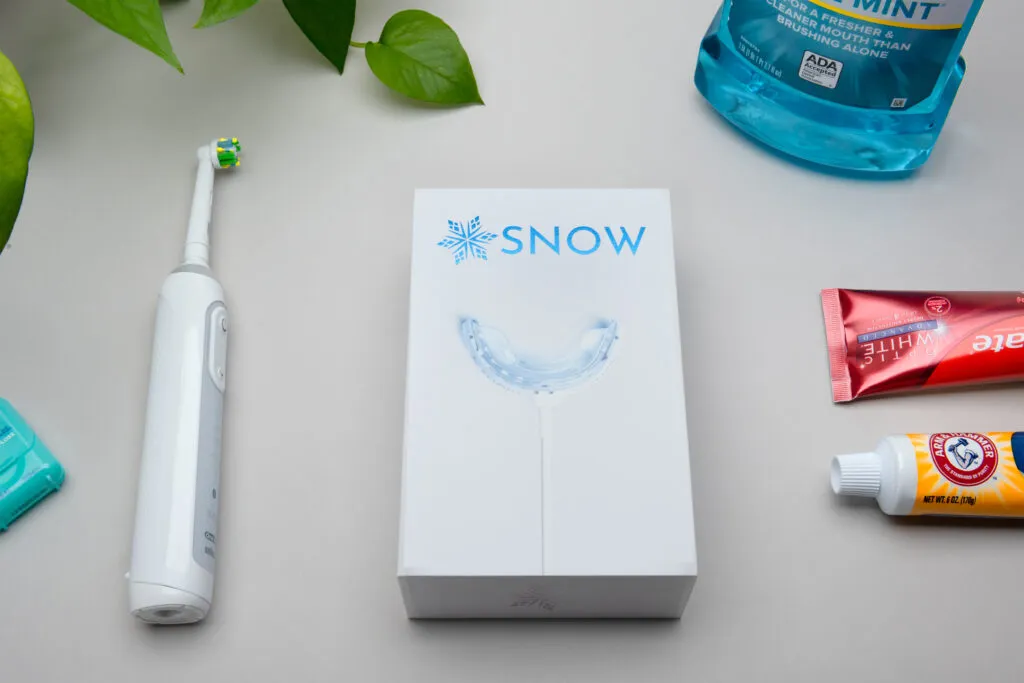
This guide walks through what to expect, how the kit works, and who should be cautious. We also share our firsthand test results, explain what’s included in the current DiamondSeries version, and break down pricing and policies.
Snow Teeth Whitening at a Glance
Snow’s DiamondSeries Whitening Kit combines peroxide-based whitening with a blue LED mouthpiece, aiming to remove surface stains gently and effectively.
It’s designed with sensitive teeth in mind and includes remineralizing ingredients to reduce discomfort.
Each kit provides over 75 treatments and plugs into most smartphones—no batteries required.
-
Enamel-safe and sensitivity-friendly: Features potassium nitrate and hydroxyapatite to support comfort and enamel health
-
Customizable use: Use for 9 to 30 minutes per session
-
No batteries needed: Wired LED mouthpiece with multiple device adapters
-
Low per-session cost: About $1.05 each, based on current pricing and treatment count
-
Portable and simple: Small enough for travel, with a separate gold serum pen for LED-free use
What To Expect from Snow Teeth Whitening
Most people see noticeable results from Snow after two to three uses, with full effects developing over two to three weeks. That’s typical for peroxide-based whitening when used as directed.
Daily use for 14 to 21 days is a standard treatment cycle. After that, touch-ups once or twice a year can maintain your brighter smile, especially if you drink coffee or red wine regularly.
Sensitivity may increase if sessions are too long or too frequent. Many users reduce discomfort by spacing out treatments every other day or shortening sessions to 10–15 minutes.
How Teeth Whitening Works
Teeth whitening works by breaking down stains on your enamel with peroxide-based gels—usually hydrogen peroxide or carbamide peroxide. These ingredients penetrate the enamel and break down pigment molecules that make teeth look yellow.It was wrapped in a thin cardboard slipcase.
This chemical reaction only works on natural teeth. If you have crowns, veneers, or fillings in visible areas, they won’t lighten—only the surrounding enamel will. That can create noticeable mismatches.
Kits like Snow contain hydrogen peroxide equivalents between 3% and 13%, depending on the base (e.g., 10% carbamide peroxide ≈ 3.5% hydrogen peroxide). These levels are considered safe when used as directed.
Do LED Lights Work for Teeth Whitening?
Some whitening kits include blue LED lights, like Snow’s, to “accelerate” the whitening process. But what does science say?
Research shows these at-home LEDs may not significantly boost whitening results. Most of the whitening still comes from the peroxide gel itself. The LED light can make teeth look slightly whiter immediately after a session, but that’s often due to dehydration—and the shade usually returns to baseline as your teeth rehydrate.
Some people find that LED lights increase tooth sensitivity. Others skip the light entirely and still see results. If sensitivity spikes, skip the light and continue with gel only.
In Our Tests
In our tests, we saw a −2 shade‑step change after three 15‑minute sessions. The change was noticeable without being unnatural, and results held steady over the following week.
Sensitivity was moderate (rated 3–4 out of 10) when used daily. Once spaced out to weekly sessions, that dropped to 1 out of 10. Cleanup took under a minute.
Setup was straightforward: twist the serum wand, paint on your teeth, and plug the LED mouthpiece into your phone. Unlike some devices, Snow doesn’t shut off automatically—you’ll need to unplug it manually.
Snow Kit
In our tests, the DiamondSeries formula whitened teeth gently and predictably.
Why We Like It
-
Formulated for sensitivity: Includes hydroxyapatite and potassium nitrate
-
No batteries needed: Plugs into most phones with adapters
-
Simple design: Paint-on serum with blue LED mouthpiece
What to Know
-
LED mouthpiece doesn’t auto-shut off
-
Not effective on crowns, veneers, or fillings
-
Use once daily for 9–30 minutes
Specs
-
Peroxide gel with hydroxyapatite & potassium nitrate
-
Wired LED device
-
75+ treatments per kit
Typical price (as of 2026): $59–$79. What customers say: effective whitening; gentler on sensitive teeth; some shipping issues.
Compare Top Options
Snow, Crest 3D Whitestrips, and custom dentist trays each take a different approach to whitening. Use the table below for a quick side-by-side.
| Product | Whitening Method | Best For |
|---|---|---|
| Snow DiamondSeries | Peroxide gel + LED light | Gentle, frequent use |
| Crest 3D Whitestrips | ADA-accepted peroxide strips | Fast results, no device |
| Custom Dentist Trays | 10% CP in molded trays | Long wear, long-term shade shift |
Mini-Cards (Extra Details)
-
Snow: Uses hydroxyapatite and potassium nitrate; wired LED; 75+ uses per kit.
-
Crest: ADA Seal; 30-minute daily strips; no light required.
-
Dentist trays: Worn overnight for 10–14 days; most gradual and longest-lasting change.
Safety And Candidacy for Snow Teeth Whitening
If you’ve had dental work or sensitive teeth, whitening safely starts with knowing your baseline.
Before using any whitening product, it’s important to understand if it’s appropriate for you. Peroxide gels work best for people with healthy, natural teeth and no active oral issues.
Whitening may not be safe or effective if you have:
-
Untreated cavities: Peroxide can enter the tooth and trigger nerve pain
-
Cracked or thin enamel: Whitening can cause sharp sensitivity
-
Gum disease or recession: Can increase irritation or expose sensitive roots
-
Pregnancy or breastfeeding: Most experts recommend postponing whitening
-
Teens under 14–16: Thinner enamel and large pulp chambers can increase risk
A dental checkup helps confirm if whitening is a good fit for your mouth right now. If any of these apply, book a dental check first.
What is Included in the Snow DiamondSeries Kit?
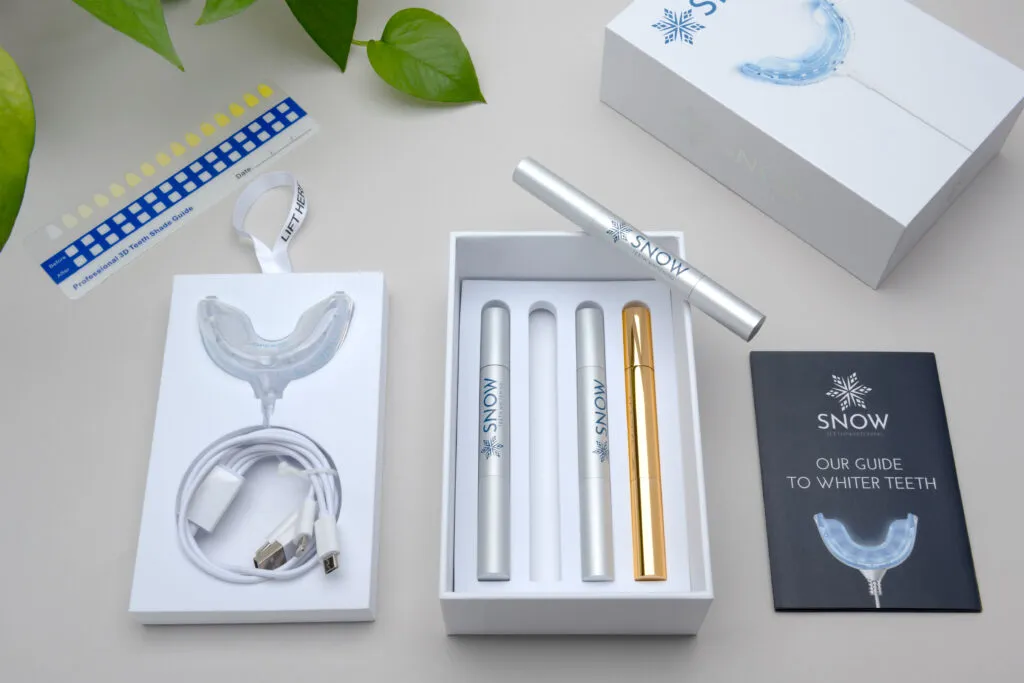
The DiamondSeries kit includes everything you need for an at-home routine.
The current Snow kit is different from its earlier “Original” version. The DiamondSeries formula adds comfort-focused ingredients and slightly revised packaging.
Here’s what’s in the current kit:
-
Three 2 mL whitening serum pens (DiamondSeries formula)
-
LED mouthpiece with USB, iPhone, Android, and USB-C adapters
-
Shade guide to track your progress
-
Instructions for setup and maintenance
Older kits may differ—check your box against this list to confirm.
How To Use the Snow DiamondSeries Kit
Each session is short and simple—just paint, plug in, and rinse.
Follow these steps each time you whiten:
-
Brush your teeth gently (no whitening toothpaste needed).
-
Twist the wand and paint a thin layer of serum onto the front of your teeth.
-
Plug in the LED mouthpiece and insert it into your mouth.
-
Set a timer and leave it in for 9 to 30 minutes.
-
Unplug, rinse your mouth, and rinse the mouthpiece with water.
The mouthpiece doesn’t shut off automatically. If your teeth feel tingly or zappy, try shorter sessions or skip the LED next time.
Is the Snow Whitening Kit Good for Travel?
The kit is compact, and Snow sells an LED-free pen for quick touch-ups.
If you’re traveling, you can pack the wired kit in a small pouch with your phone and charger. The mouthpiece works on most modern phones, tablets, and power banks.
Snow also sells an Extra-Strength Gold Serum Pen for use without the LED. Just apply and wait up to 30 minutes, no devices needed.
After each session, avoid dark foods and drinks for 24 to 72 hours. This “white diet” window helps protect your new brightness.
Snow DiamondSeries Pricing and Shipping
You’ll pay less than $2 per session, but policies can vary depending on where you buy.
Here’s what to expect:
-
Typical cost: $59–$79 per DiamondSeries kit
-
Treatments per kit: 75+
-
Per-session cost: ~$1.05
-
Refunds: 30-day money-back guarantee (on official site)
-
Warranty: 2 years on the LED mouthpiece (covers defects only)
-
Shipping: 5–13 business days, including processing time
-
Cruelty-free: Self-declared; no third-party certification listed
Some customers report confusion around refunds. Always save your receipt and read the return instructions.
How We Test
To evaluate whitening systems, we use several practical and clinical tools.
Here’s how we tested the Snow DiamondSeries kit:
-
Shade Change Test: Used a VITA shade guide to measure change after sessions 1, 3, and 7
-
Sensitivity Scale: Rated on a 0–10 scale daily; tracked when symptoms appeared and resolved
-
Irritation Log: Monitored gums and lips for redness or discomfort
-
Setup Time: Measured how long it took to prepare, apply, and clean up
-
Comfort Score: Rated how the mouthpiece felt in the mouth (0–10)
Results included: −2 shade steps after three uses, mild sensitivity that improved with spacing, and no irritation after day three. Setup averaged under two minutes. One limitation: home lighting and diet can skew shade results, so we control for those during testing.
Sources
- American Dental Association Council on Scientific Affairs. (2009). Tooth whitening/bleaching: Treatment considerations for dentists and their patients. American Dental Association. Retrieved from https://www.ada.org/resources/ada-library/oral-health-topics/tooth-whitening
- Carey, C. M. (2014). Tooth whitening: What we now know. Journal of Evidence-Based Dental Practice, 14(Suppl), 70–76. https://doi.org/10.1016/j.jebdp.2014.02.006
- Sutil, E., de Souza, J. F., Pires, L. C., & da Silva, J. F. (2023). Efficacy and safety of carbamide peroxide tooth-whitening gels: A systematic review. Cureus, 15(1), e33256. https://doi.org/10.7759/cureus.33256
- Baroudi, K., & Hassan, N. A. (2014). The effect of light-activation sources on tooth bleaching. Nigerian Medical Journal, 55(5), 363–368. https://doi.org/10.4103/0300-1652.140316
- U.S. Food and Drug Administration. (2024). Is it a cosmetic, a drug, or both? (Or is it soap?) FDA. Retrieved from https://www.fda.gov/cosmetics/cosmetics-laws-regulations/it-cosmetic-drug-or-both-or-it-soap
- Ultradent Products, Inc. (2025). Why LED lights are unnecessary for effective teeth whitening. Ultradent. Retrieved from https://www.ultradent.com/company/newsroom/article/2025/led-lights-unnecessary-for-effective-teeth-whitening
- Class 2 Device Recall ARC Teeth Whitening Pen. (2023, November 7). FDA Medical Device Recalls. U.S. Food and Drug Administration. Retrieved from https://www.accessdata.fda.gov/scripts/cdrh/cfdocs/cfres/res.cfm?id=203688
- TrySnow. (2024). DiamondSeries Teeth Whitening Kit. SNOW Oral Care. Retrieved from https://www.trysnow.com/products/diamond-teeth-whitening-kit-1-serum

Licensed dental specialist focusing on personalized dental content writing and blogging.

Related Articles
Auraglow Teeth Whitening Review (2026)
The AuraGlow teeth whitening kit promises to be a safe, simple, and affordable at-home means of brightening your smile....
HiSmile Whitening Strips Review (2026)
Get the real scoop on Hismile teeth whitening products before you buy them. Read our Hismile review so that you can make...
Supersmile Toothpaste Review (2026)
Are you curious about the Supersmile tooth whitening system? Our review looks at how it works, what ingredients are in i...
Carbamide Peroxide for Teeth Whitening
Wondering if carbamide peroxide is the right teeth-whitening treatment for you? Learn how it compares to hydrogen peroxi...