Best Water Flossers of 2026


Reader-supported. We may earn a commission from links on this page. Advertising disclosure.
In this article
Everything We Recommend
How Do Water Flossers Work?
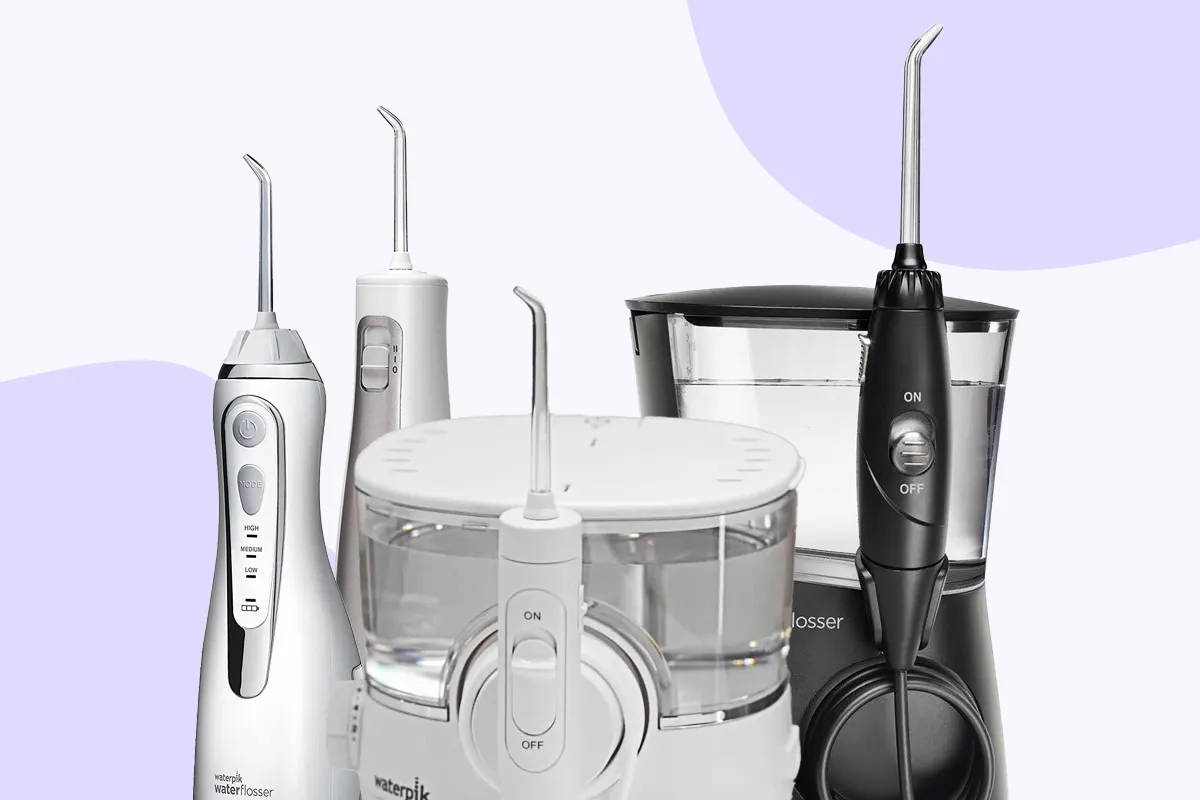
Water flossers are also known as oral irrigators. They are handheld devices that remove plaque and food particles between your teeth.
They do this by spraying steady pulses of water powered by a small motor. The pressurized stream of water can reach areas like your gum line and between your teeth.
How We Rate and Review Products
All medical content on this site is written by our team of experienced writers and researchers. NewMouth writers vet products that are recommended and reviewed in the industry. In cases where this is not possible, our team will:
- Compare positive and negative reviews on the products
- Talk to company leaders to ensure their products are safe and effective
- Look into costs to ensure customers are getting the best quality products at reasonable prices
- Read research studies to compare the pros and cons of each product
Every piece of content is heavily reviewed before publication. This includes a medical review by a licensed dentist. We do not recommend products that do not meet the professional standards of our dentists.
7 Best Water Flossers (Waterpiks)
Water flossers with the American Dental Association (ADA) Seal of Acceptance help prevent cavities, gingivitis, periodontal disease, and other oral health conditions. The ADA currently has approved Waterpik and Philips Water Flossers.
These are the seven best water flossers available on the market:
Waterpik Aquarius
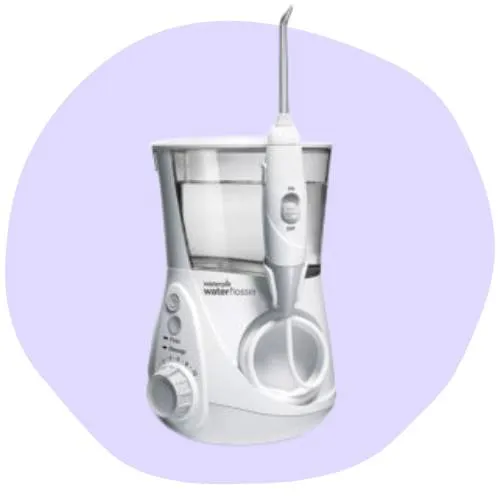
The Aquarius is our top countertop pick because it balances reservoir size, tip variety, and pressure control better than most competitors.
Why We Like It
- Large 22-ounce tank supports up to 90 seconds of flossing
- Ten settings plus massage mode work for a wide range of users
- Seven included tips cover braces, implants, and general cleaning
- Built-in timer and pacer help keep sessions consistent
What to Know
- It takes up more counter space than cordless models
- You need an outlet nearby for daily use
Waterpik Cordless Advanced
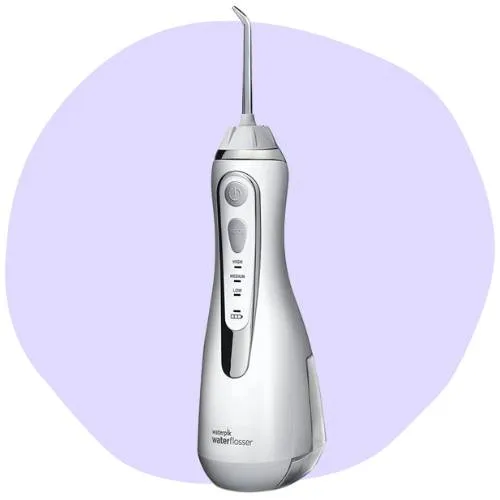
Cordless Advanced is the best choice for travel and small bathrooms because it keeps the familiar Waterpik cleaning feel in a compact body.
Why We Like It
- Portable, lightweight, and waterproof
- Rapid charging and included travel case make it easy to pack
- Three pressure settings and rotating tip improve usability
- Works well for braces and restorative dental work
What to Know
- Smaller tank means shorter sessions
- It does not offer the same pressure range as a full countertop unit
Waterpik ION
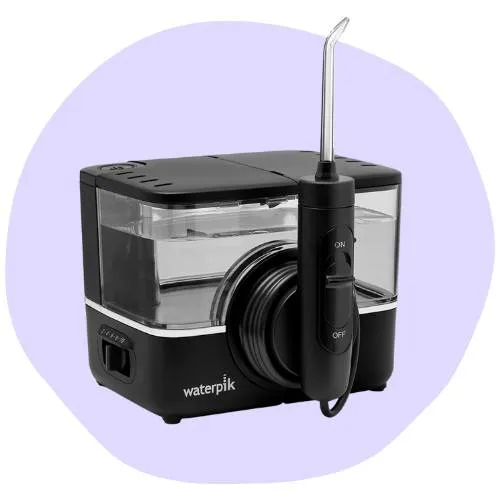
The ION is the best compact countertop-style option if you want longer sessions and strong pressure without dedicating as much counter space.
Why We Like It
- Thirty percent smaller than standard plug-in Waterpik models
- Rechargeable battery can last up to four weeks per charge
- Ten pressure settings and six included tips
- Magnetic handle cradle keeps the unit tidy
What to Know
- It still costs more than basic cordless picks
- It is more of a compact countertop model than a true travel flosser
Waterpik Cordless Freedom
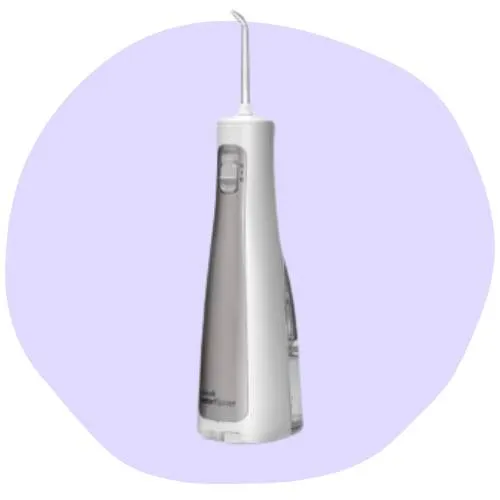
Cordless Freedom is a good entry point if you want a simple, low-cost water flosser for light use, travel, or a small shared bathroom.
Why We Like It
- Affordable and easy to carry around
- Waterproof body works well for shower use
- No charging dock required
- Good fit for occasional users
What to Know
- Uses AA batteries instead of a rechargeable battery
- Two pressure settings is limited compared with premium models
Waterpik Sonic-Fusion 2.0
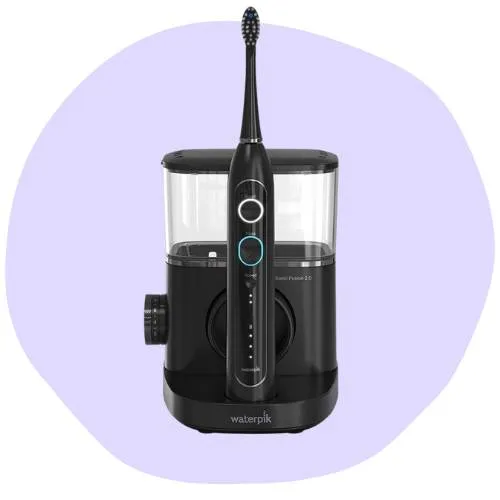
Sonic-Fusion is the best fit for people who want to combine brushing and flossing in one countertop system instead of managing two separate devices.
Why We Like It
- Combines brushing, flossing, and combined mode in one unit
- Can simplify routines for users who skip a separate flosser
- Premium case and accessories feel more complete than basic kits
- Backed by a three-year warranty
What to Know
- Costs more than buying a standard water flosser alone
- Less appealing if you already own a toothbrush you prefer
Waterpik Whitening Water Flosser
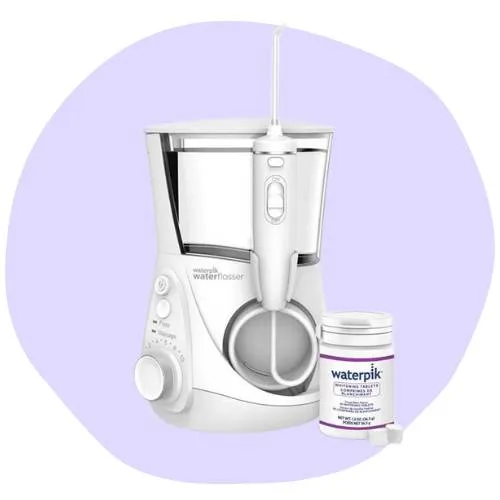
This is the most useful choice for users who want plaque removal plus stain-maintenance features without stepping into a full whitening-kit routine.
Why We Like It
- Includes whitening tablets with the flosser system
- Countertop capacity supports longer sessions
- Adds stain-maintenance benefits to a normal flossing routine
- Works with implants, crowns, and braces
What to Know
- Restorations still will not whiten
- Ongoing tablet replacements add extra cost over time
Waterpik Water Flosser for Kids
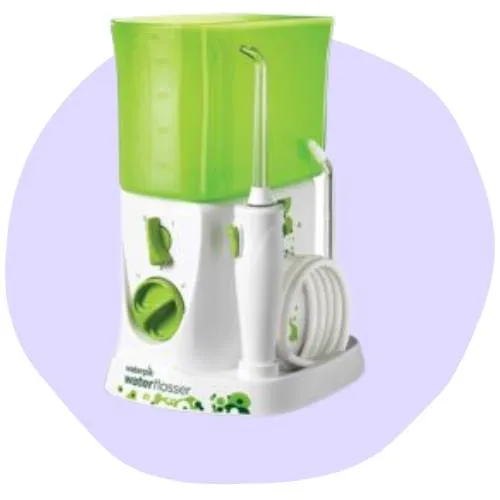
Waterpik’s kids model is the easiest recommendation for beginners because it is smaller, less intimidating, and simple enough for supervised use.
Why We Like It
- Compact design fits smaller hands and counters
- Helpful for kids with braces or crowded teeth
- Strong plaque-removal claims for daily supervised use
- More approachable than a full-size adult model
What to Know
- Younger users still need supervision
- Feature set is simpler than premium adult models
Things to Consider Before Buying a Water Flosser
The best water flosser will depend on your needs. These are things to consider before buying a water flosser:
Pressure Settings
Water flossers come with two or more pressure settings. These settings let you control the force of the water spray the device produces.
Having more settings to choose from can be useful, especially if you have sensitive gums or teeth. You can start with the lowest pressure and gradually switch to stronger settings once you’re more familiar with your water flosser.
Flosser Tips
Some water flossers come with various flosser tips. Others might only have the classic tip.
A classic jet tip is good enough for everyday use. If you have braces, you might want a water flosser with an orthodontic tip.
Water Reservoir
The size of your device’s water reservoir will determine how much flossing time you have. Cordless water flossers typically have a water reservoir of 7 ounces, which gives you 45 seconds of flossing time.
Countertop water flossers can hold up to 35 ounces of water. This roughly translates to 90 seconds of flossing time.
Portability
If you travel a lot, portability is important to consider. Cordless water flossers are easier to bring around.
They operate on disposable or rechargeable batteries, and they’re often designed to be compact and lightweight. However, they often have less water storage and pressure settings.
Countertop water flossers provide lots of options, but they are bulky. They also need a socket outlet to work.
Is Water Flossing Better Than Traditional Flossing?
Studies show water flossers are effective at removing plaque. However, none confirm that they can prevent cavities between your teeth the way floss can.
The American Dental Hygienists’ Association (ADHA) recommends water flossing in addition to other methods of teeth cleaning. Dentists recommend using water flossers as a supplementary step to traditional flossing.
You may find water flossing easier to do if you have dental work, including:
If you have trouble maneuvering string floss, a water flosser may be a good option.
What Does Science Say?
Research shows that water flossers have advantages over traditional floss in three key areas. This includes:
- Plaque removal
- Compatibility with orthodontic appliances
- Dental implant maintenance
A group of researchers found that using a water flosser after toothbrushing can result in 75% less plaque, while traditional string floss may only reduce plaque by 58%.3
Another study found that water flossers significantly reduce plaque and bleeding in people with fixed dental appliances. This is compared to traditional string floss.
Water flossers can also help with dental implant maintenance. Researchers found that water flossers significantly reduce bleeding in 30 days. This is compared to using traditional floss.
Summary
Water flossers use a stream of pressurized water to clean the teeth. These handheld devices remove plaque, food particles, and other debris.
Before buying a water flosser, there are a few factors to consider. These include:
- Pressure settings
- Flosser tips
- Water reservoir
- Portability
Studies show water flossers may be more effective than traditional flossing at removing plaque between teeth. To ensure you’re buying a quality product, look for the American Dental Association (ADA) Seal of Acceptance.
Ultimately, most dentists recommend using water flossers to supplement your daily oral hygiene routine. This ensures plaque reduction, which directly results in less cavities and gum disease.
Sources
- Lyle, D.M. “Use of a water flosser for interdental cleaning.” Compendium of Continuing Education in Dentistry, 2011.
- Lyle, D.M. “Relevance of the water flosser: 50 years of data.” Compendium of Continuing Education in Dentistry, 2021.
- Goyal, et al. “Evaluation of the plaque removal efficacy of a water flosser compared to string floss in adults after a single use.” The Journal of Clinical Dentistry, 2013.
- Sawan, et al. “Effectiveness of Super Floss and Water Flosser in Plaque Removal for Patients Undergoing Orthodontic Treatment: A Randomized Controlled Trial.” International Journal of Dentistry, 2022.
- Magnuson, et al. “Comparison of the effect of two interdental cleaning devices around implants on the reduction of bleeding: a 30-day randomized clinical trial.” Compendium of Continuing Education in Dentistry, 2013.
- Casanova, et al. “Diabetes and periodontal disease.” BDJ Team, 2015.
- Jang, et al. “Is it worth applying self-irrigation after third molar extraction? A randomised controlled trial.” British Journal of Oral and Maxillofacial Surgery, 2021.
- Lyle, D.M. “Efficacy of the use of a water flosser in addition to an electric toothbrush on clinical signs of inflammation: 4-week randomized controlled trial.” Compendium of Continuing Education in Dentistry, 2020.
- Ng and Lim. “An Overview of Different Interdental Cleaning Aids and Their Effectiveness.” Dentistry Journal, 2019.
- Fried, J. “Interdental cleansing.” American Dental Hygienists’ Association, 2012.

UCLA-trained dentist practicing in public health. Focuses on whole-body approach to dental care.

Experienced content writer dedicated to delivering accurate, unbiased dental information.
Related Articles
Teeth Whitening Swabs: Pros, Cons, and Cost
Want whiter teeth without the hassle (and expense) of a trip to the dentist? Find out everything you need to know about...
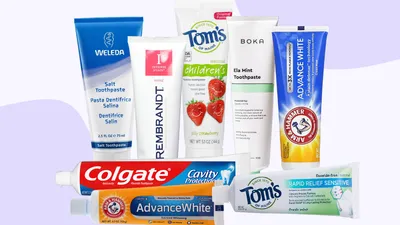
Best Whitening Toothpastes in 2026
The best whitening toothpaste can help lift surface stains and maintain a brighter smile, but it will not replace bleach...

Best Mouthwashes of 2026
Looking for the best mouthwashes of 2026? Here are 7 dentist-approved options that will leave your mouth feeling fresh a...
Best Mouthguards for Sports (2026)
Mouth guards protect the teeth and gums from injury while playing sports. Different types of mouthguards are available,...